
How Long?
On acceptance & the displaced dreams of generations

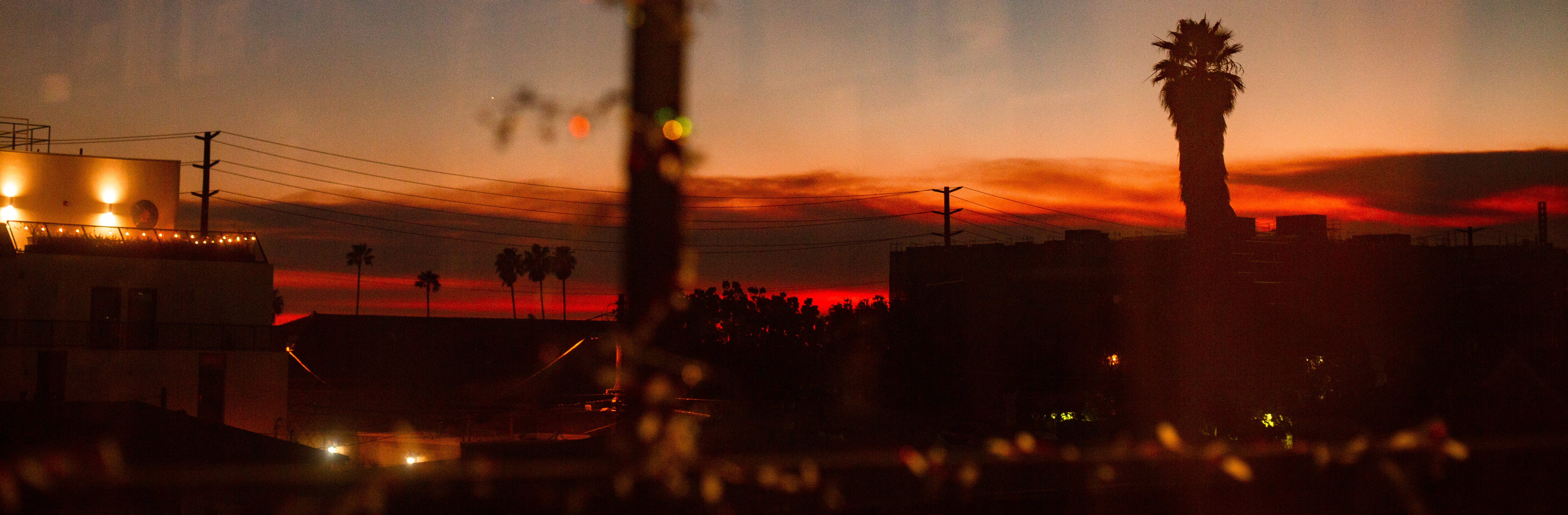
When the fires happened in LA, my roommate and I adopted a catchphrase: how long? It covered the bases of our existential dread and everything we didn’t know how to express. We’d gather in the kitchen, our days and the news spilling out of us, and when it seemed there was no button, we’d land on our two-syllable sign off. It filled any silence. We’d pass each other in the hallway and chime our knowing commiseration like an animal mewling or a midwesterner lifting three fingers in recognition on a dirt road. Maybe there is a word in German for the unknowing void at the end of the conversations we had during that time, one long word of dread-filled syllables that suits the wet blanket of cotton you feel in the back of your brain when you talk about “the everything” these days.
When you’re in the middle of a crisis, part of your body begs the question, “How long will we be here?” The same thing happened when lockdown started. The same thing happened after my second infection with SARS-COV-2 when I got sick then sicker then a different sick then just didn’t get better. The same thing happens daily as we’re inundated with news of the world’s various states of collapse, updates on scrolled-through genocides, tweets about unsanctioned war, quiet dissolution of human rights. We want to prepare ourselves, we want to be ready. Our nervous systems long for an end date. We need to know. How long?
My friend just got out of an unhealthy, long-term relationship and shared part of why she keeps self-sabotaging, “I think there’s a part of me that doesn’t feel like this is permanent. Nothing feels permanent. There’s still a part of me that’s still expecting him to show up and us to go back.”
Nothing feels permanent, but it feels like forever. The question is: how long will it be forever?1
The question we think we’re asking is, “How long will things be like this?” But in our guts, if we’re honest, we’re asking, “How long before it can be how it was?” I think we know that’s the wrong question, but we ask it on repeat anyway.
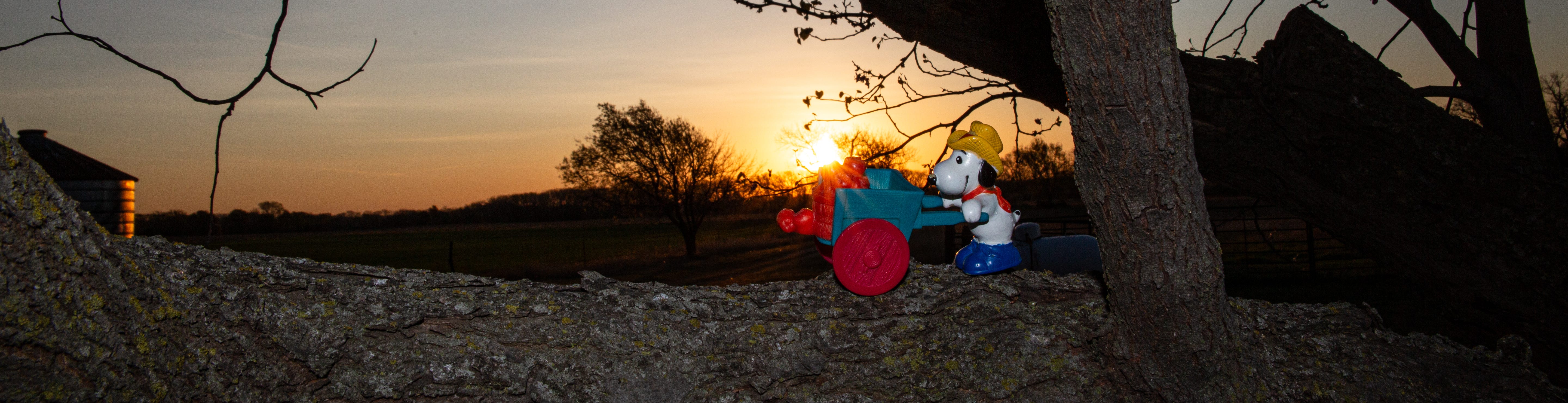
I recently moved back home to the farm I grew up on in Kansas. My dream was always to travel, to live in New York. Growing up in a small town that most people never left instilled in me a need for discovery. Or maybe just: growing up nowhere left me with the need to be everywhere. It’s one of the things that drew me to comedy. Losing your mind on the road: no longer just for poets and gold seekers heading west; now also for modern day philosophers selling their souls to the algorithm. Comedy and travel are still my dream. Though stand up is looking less appealing as it’s cannibalized by the internet. I guess most everything is suffering that fate.
Another friend recently announced she was leaving Colorado because it was too expensive there to get her feet under her. I told her I was back in Kansas for a while too, and I’d have to explain why later. There are a multitude of personal reasons I can rattle off, little things that stack up, the expense of living & my health included. My folks live a few minutes away in our small town, my oldest sister 20 minutes away. My family is wonderful, and I have land here that is beautiful in spring. I have rooms to wander in an endless cycle of forgetting why I left the last one and projects that require stillness and time.
But all those reasons for the why and how of it happening now don’t feel like they cover it. It’s reminiscent of when someone asks how you’re doing and there’s an echo of the everything behind your stumbling, “Oh, pretty good, you know.” I am here because that echo, the dissonance of continuing as I was while everything is how it is, got too loud. The compass was spinning and the destinations unknown.
I am grateful to have this home, a stable place I can visit to tend to who I am. Obviously having access to land is a privilege. Every day on the internet is a reminder of how lucky I am. We watch people’s homes be reduced to rubble. We witness people ripped from the arms of their loved ones, stolen from communities. People who’ve chosen to live in my home state are having to flee as the government no longer recognizes who they are. My generation’s individual displacements and returns are a whisper in the cries of a world turned over, and the din will only get louder as crises compound. Livable habitat is shrinking. Whether by climate change or fascism or war, it is all by our own hand.
Yet another reason I can rationalize not currently chasing my childhood dreams: the world I dreamed about is dying. Our ability to dream is dying. Our dreams have to change.
Back in 2020, I’d chased my dreams by moving to NYC. I was only there for 18 months. In 2022, I took a spring trek to LA that was supposed to be temporary, but covid disabled me and I never got to go back to New York. The haphazard cross-country journey left my belongings scattered in boxes from NYC to my sister’s in Kentucky to my parent’s attic.
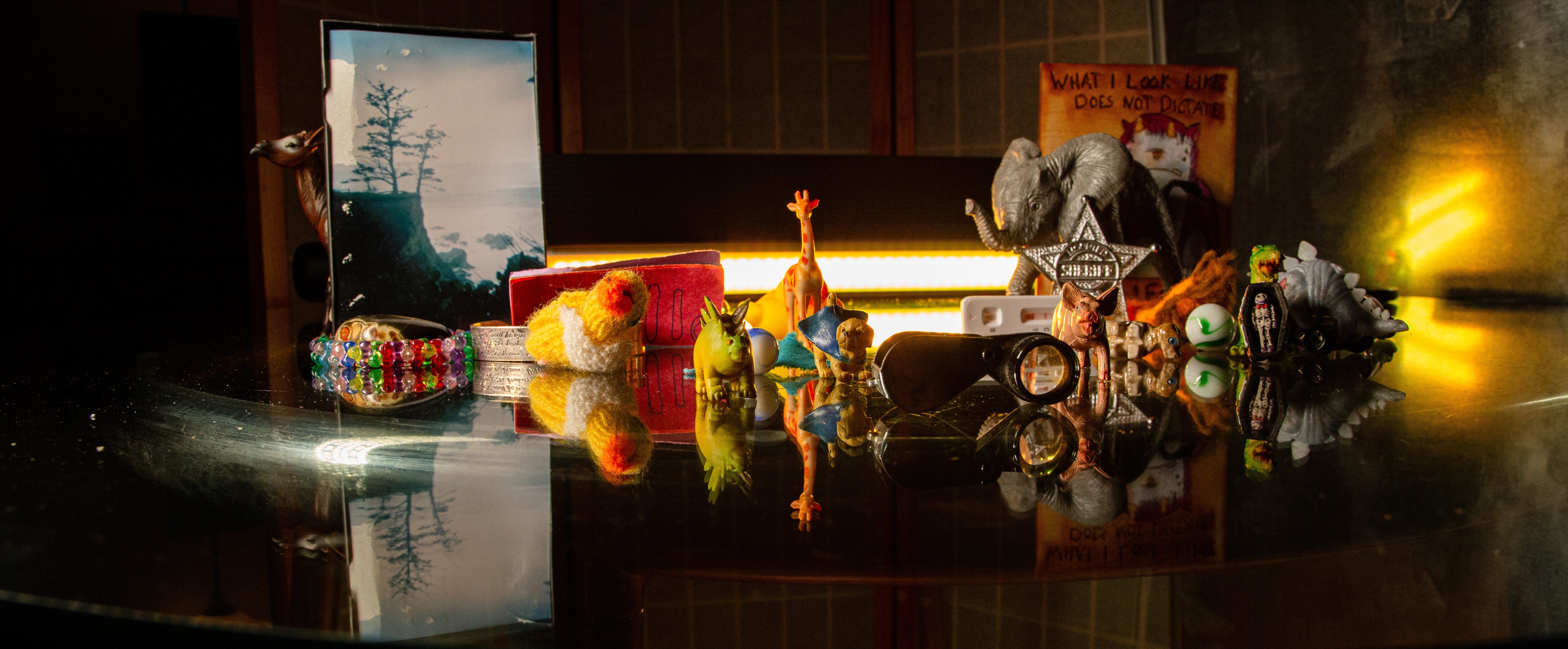
I’ve since gathered most boxes and unpacked quite a few. In unboxing, I have discovered a treasure trove of items that I’d packed away for unknown periods of time, objects put into purgatory until a more stable home surfaced: half a box of Maldon salt left in storage last year in LA (you don’t throw away the good stuff), sample bars of shampoo and conditioner shoved among sweaters in New York, a set of dishes my parents bought me in college that wouldn’t fit in the car-move to Denver. All expirations void in the search for a home.
I’ve had a bit of an unconventional trajectory, but I don’t think the experience of unpacking boxes you’d forgotten about or packing belongings without knowing when they’ll be opened again is rare in my generation. A friend of mine recently started a comedy show called “Adult Show & Tell” in Madison, WI. She announced the first show with the following image:
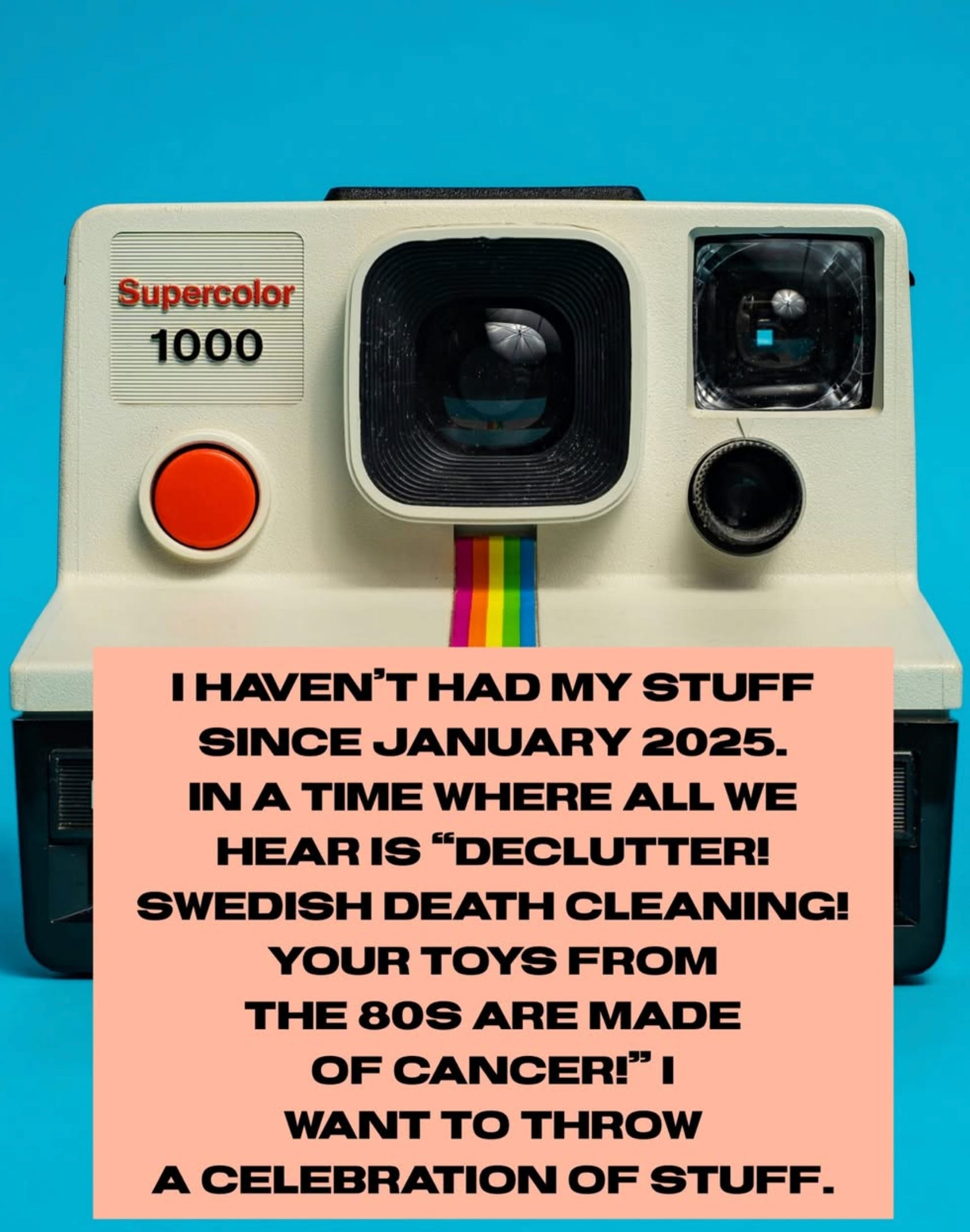
If you’re near Madison, check out her show. She’s a wonderful producer, person, and comedian, and I know this will be a blast.
Get tickets for her show in Madison
She left LA during the fires, another unintentional uprooting with scattered landings: destination unknown in time and space.
My generation & the generations after us don’t know when or if we’ll own homes, but the uncertainty stretches further than that as our jobs become obsolete and what used to be the bare minimum becomes unattainable. Old dreams wait in attics while we try to start fresh ones in 250 square feet studios. We chase down dreams while they die and accept what we have to to make it work as we try to build in the middle of collapse. We move like strays, displaced by catastrophes and anomalies growing ever more commonplace.
Part of accepting moving back home was accepting new limits with disability. I don’t know how long it will be before I can work the full-time job or two it would take to survive in New York or even Denver, even if stand up were one of those jobs. How long it will be before I can rely on my body and brain to catch me. I don’t know if any of how I used to move in the world will ever fully come back, and the world isn’t getting any easier to navigate.
Everyone who asks if I’m doing better, seems to be asking, “Are you back to how you were before?” I am better, but I’m not the same. Some of that change is for the better though. Better is such a tricky word. I’ve gotten extremely lucky in that I have absolutely improved, but part of getting better after improving has been managing how I am different.
When you sit in loss long enough, it doesn’t become about how long it will last. It becomes about what is happening now. What is possible in this moment. And it’s in learning about what you can’t do that you learn more about what you can do. It’s in accepting what isn’t possible, that you find out what is and what it will take to reach it. It’s a process I think could be useful in this liminal space we find ourselves in, this time of monsters.2


It isn’t my dream to be here forever. But now that I’m here, and I realize I am here for an unknown period, I’m finding I do love it. I’ve let some dreams creep in of what the place could look like in a year, or how I might return biodiversity to an acre or two. In stand up, the feedback is immediate: the flooding rush of a good set and the devastating hollow that follows a bomb, both of which feel like they’ll fill eternity. But all the pay off from work on the land takes time and might not show up at all.
I know if I’m to get anything worthwhile done or if I’m to discover what could be, both in the literal changes of the land and the invisible ones in my head, I have to stop asking how long I will be here and just let now be the forever it feels like.
Last week, my friend John updated me on his cat Grandpa during a call, “She’s been hiding in the bedroom. I accidentally locked her out for 9 hours, so now that she’s back in, she’s refusing to leave. It’s like she’s worried just because something went away temporarily, it could go away forever.” Something we certainly couldn’t relate to at all.
Part of me has been sitting in a room I was locked out of. I think we all did that to an extent after lockdowns. A door was shut unexpectedly for an unknown period of time. Once it opened, we scrambled back in, blindly sitting in a space we thought was the same, refusing to leave with the newly programmed terror of it going away again stuck in our heads.
Sitting in unknowing is uncomfortable. Sitting in any new space is uncomfortable. I’ve gotten more comfortable over the last four years with all I don’t know.
I could fight myself and the world for fleeting moments when I get to eat again the bright pieces of what I knew once to be true, the hard-earned discoveries about my heart and the world. Or I can accept reality and go hunting for some other knowing.
Maybe the more we cling to the shape of our dying dreams, the less likely it is we’ll be able to save them. Maybe they’re supposed to decay, organic matter returning to the soil. Let it rot. Let the seeds return to the earth. Who’s to say it all won’t grow back. It’s terrifying not knowing how long it might take or how recognizable it might be when it does, but if it’s held above ground, wriggling and kicking, life will no doubt waste.
There are plenty of references to non-living systems being most successful when they mimic the natural breakdowns of nature.3 Maybe the dreams of our generation, individually and as a group, can follow the same path. Though we race time and lose ground the longer we wait to start the process.4
Maybe this all is rationalization, putting a big narrative bow on events largely out of my control. There are infinite ‘maybe’s in the unknown. That infinity can be terrifying or freeing. Whether this is foolish rationalization or not, it’s what my brain needs to move forward. I know that’s what we all need to do in a sense. Release the dying world and start the patient work required in the interim while we wait for the old to finish crumbling so the new can grow. Good luck out there. Let me know if you discover how long we’ll be waiting.
There is a book I’ve yet to read about the last Soviet generation that feels relevant to this feeling. A friend recommended it in IG stories and the title has haunted me since. Maybe add it to your list too: “Everything Was Forever Until It Was No More” by Alexei Yurchak.
Apparently, “The old world is dying, and the new world struggles to be born; now is the time of monsters,” is a liberal translation from Antonio Gramsci’s Prison Notebooks. Another translation, “The crisis consists precisely in the fact that the old is dying and the new cannot be born; in this interregnum a great variety of morbid symptoms appear.”
I said plenty, but here’s one vague reference for now: “The process of growth followed by breakdown, mimics natural systems. I’ve come to realize that the really important scientific breakthroughs of our age revolve not around augmenting humans with technology but around taking the rules by which living systems sustain and replenish themselves, and applying them to non-living systems including economies and polities. This is what is meant by regenerative economics. It involves moving away from extractive economics and toward systems that restore the earth rather than destroy it.” - The End of Reality: How Four Billionaires are Selling a Fantasy Future of the Metaverse, Mars, and Crypto by Jonathon Taplin
And hey, if your dreams are thriving and you’re making it and the dissonance isn’t too loud - keep at it, kid. I’m proud of you. I hope you make it forever.
amazing as always